NBA Europe
A true chess match for the entire continent - Regulatory Position, Expected Resolution, Stakeholder Impact

Executive Summary
Since March 2025, when NBA Commissioner Adam Silver announced plans to establish a European basketball league alongside FIBA, the project has evolved from an ambition to an active commercial process — attracting over 120 investors, multiple bids exceeding $1 billion, and a working launch target of October 2027. However, the initiative has encountered structured institutional resistance from the European Union, most concretely through a formal European Parliament resolution (passed October 2025 with 552 votes) and a written answer from EU Commissioner for Sport Glenn Micallef (February 2026) expressing “longstanding concerns” about closed league models, profit offshoring to non-EU entities, and threats to the European Sport Model.
As of May 2026, the political and legal landscape is defined by competing forces: the NBA’s commercial momentum and investor enthusiasm on one side; EU regulatory doctrine, EuroLeague legal threats, and club hesitancy on the other. The two structural battlegrounds are (1) whether the NBA-FIBA league can navigate EU competition law — particularly salary caps, joint broadcasting, and ownership structures — and (2) whether a negotiated settlement with EuroLeague can be reached before binding bids close during 2026.
Background: The NBA Europe Project
Origins and Formal Announcement
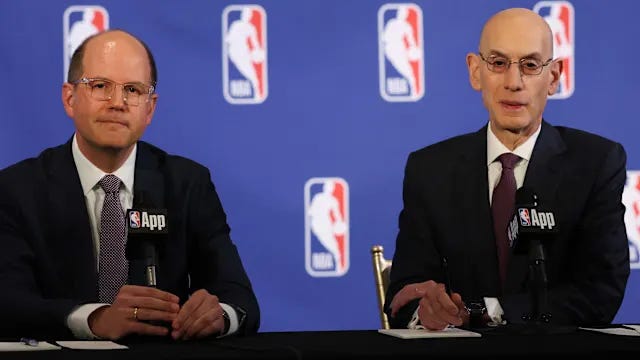
On March 27, 2025, NBA Commissioner Adam Silver and FIBA Secretary General Andreas Zagklis jointly announced plans to create a new professional basketball league in Europe, to be co-organized and sanctioned by both bodies. The announcement represented the most concrete step after years of speculation, building on the NBA’s growing European footprint (three annual Global Games in European cities; a record 71 European players on opening-night rosters in 2025-26).
FIBA’s alignment with the NBA — rather than opposition — was a critical structural choice. FIBA had been in a prolonged institutional conflict with EuroLeague for over two decades, and partnering with the NBA gave it a mechanism to reassert control over the top tier of European club basketball.
Competition Structure
The proposed format, as publicly detailed by NBA Europe Managing Director George Aivazoglou, features:
· 16 teams total: 12 permanent franchises and 4 spots open annually through a merit-based qualifying route
· 12 target cities: London, Manchester (UK); Paris, Lyon (France); Madrid, Barcelona (Spain); Rome, Milan (Italy); Munich, Berlin (Germany); Athens (Greece); Istanbul (Turkey)
· Schedule integration: teams would also compete in their domestic national leagues and national team windows would be honoured
· Qualifying pathways: through FIBA’s Basketball Champions League or an end-of-season qualifying tournament
· Launch target: October 2027
Financial Model
Franchise fee
$500M–$1B depending on market
NBA ownership stake
50% of the league entity
Revenue split
45% clubs / 45% competition (NBA/FIBA) / 5% FIBA / 5% future partners
Advisors
JPMorgan Chase and Raine Group
Profitability horizon
“Multi-decades” (Silver) - It has been reported that Silver himself acknowledged at the Berlin Global Game in January 2026 that returns “will be something multi-decades in the making,” comparing the project’s long horizon to the early years of the WNBA.
The European Parliament and Commission’s Position
October 2025 European Parliament Resolution
The European Parliament adopted a sweeping resolution titled “The role of EU policies in shaping the European Sports Model” in October 2025 with an overwhelming 552 votes. Though NBA Europe was not named explicitly, the text look unmistakably directed at it. Key provisions include:
· A call on the European Commission to “use all the instruments at its disposal to safeguard the European sports ecosystem against initiatives that seek to transfer its value outside the continent”
· Emphasis on protecting “the vertical nature of the European Sport Model, whereby promotion and relegation take place at national level”
· A warning against “excessive commercialisation, pure-profit entertainment ownership models and competitions” that undermine competitive balance
· A call to “actively monitor and address threats… including breakaway competitions that endanger the overall sports ecosystem”
Austrian MEP Hannes Heide warned of “organising competitions from outside the Union,” while German MEP Rasmus Andresen questioned whether “Europe wants a sporting model governed by values or by financial statements”. Rapporteur Bogdan Andrzej Zdrojewski stated: “European sport must remain anchored in the community, not subordinated to corporate structures alien to our legal and cultural framework.”
MEP Carolina Morace’s Formal Question (November 2025)
Italian MEP Carolina Morace (The Left) submitted a formal written question to the European Commission on November 19, 2025, raising three specific challenges to NBA Europe:
1. Monopoly risk: Whether NBA Europe could constitute a “monopolistic structure incompatible with EU competition and cohesion objectives”
2. Value extraction: How the Commission plans to “prevent the fiscal, social, and governance extraction of value generated by European sport to non-EU entities”
3. Equality and sporting diversity: Whether the project aligns with EU commitments on equality, solidarity, and cultural/sporting diversity
Morace characterised the project as creating “a closed league in Europe with permanent franchises and external corporate control” that could lead to “the extraction of fiscal and economic value outside the EU” and “marginalise women’s sport by prioritising commercial profitability over equality goals”.
Commissioner Glenn Micallef’s Written Answer (February 2026)
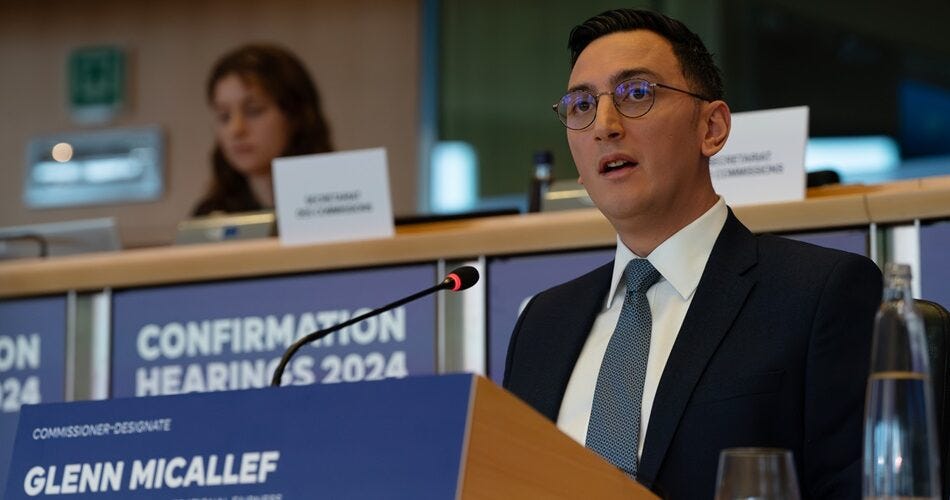
EU Commissioner for Intergenerational Equity, Youth, Culture, and Sport Glenn Micallef issued the Commission’s formal written response, which constitutes the most authoritative EU institutional position on NBA Europe to date. The full text reveals a carefully calibrated stance:
“Decisions regarding the organisation of sporting competitions are taken autonomously by sporting federations and organisations. While such decisions must comply with EU law, the specificity and autonomy of sport, explicitly recognised in Article 165 of the Treaty on the Functioning of the European Union, must also be safeguarded.”
“With regard to the ongoing discussions surrounding the proposed ‘NBA Europe’, the Commission notes that current developments continue to highlight longstanding concerns, from a sporting perspective, related to closed league models. It should be recalled that this would not be the first closed or semi-closed league operating in European basketball, and that the adverse effects of such models are well documented.”
“These include their impact on domestic competitions, on the principle of open sporting competitions based on sporting merit, on solidarity mechanisms between grassroots and elite sport, as well as on talent development and participation growth. These elements constitute core pillars of the European Sport Model.”
“Within the limits of its competences, the Commission will continue to call on new sporting competitions to respect the fundamental principles of the European Sport Model. With respect to sport-related economic activities, the Commission recalls that these must comply with EU law, including the legal framework aimed at preventing tax base erosion and protecting the integrity of the internal market, notably against the diversion of value flows to third countries.”
This answer is significant for what it does and does not say. The Commission:
· Does not initiate a formal competition investigation under Article 101 or 102 TFEU
· Does not claim that the mere establishment of NBA Europe violates EU law
· Does express explicit concern about the closed-league model’s compatibility with European sporting values
· Does raise the EU’s internal market protection as a shield against value flowing to a non-EU entity (the NBA)
· Does invoke the fiscal sovereignty dimension — a politically charged issue given the geopolitical context of transatlantic tensions in 2026
Has been reported that Micallef met separately with EuroLeague CEO Chus Bueno in Brussels in March 2026, signalling that the Commission views EuroLeague as an interlocutor aligned with EU sport policy principles.
Legal Analysis: What EU Law Says About NBA Europe
The ESLC (European Super League) Precedent
The legal landscape for NBA Europe was profoundly shaped by the Court of Justice of the European Union (CJEU)’s twin December 2023 rulings in European Super League Company (C-333/21) and International Skating Union v. Commission (C-124/21 P). These judgments established that:
· Sport is an economic activity subject to Articles 101 and 102 TFEU (anti-competitive agreements and abuse of dominant position)
· Sporting governing bodies (SGBs) may adopt rules regarding prior approval of new competitions, but only within a framework that is “transparent, objective, precise and non-discriminatory”
· SGBs cannot use prior-approval rules “solely to prevent new entrants” from competing — they cannot exercise unfettered discretion in withholding approval
As it has been reported, crucially for the NBA-FIBA proposal, because it is co-organized by FIBA (the relevant SGB), it does not face the same challenge ESL faced from UEFA and FIFA. The NBA-FIBA league is not a “breakaway” competition; it is being established with SGB endorsement — meaning the ESLC ruling’s most important constraint (on SGB prior-approval power) does not apply in the same way.
Does Establishing NBA Europe Breach Articles 101/102 TFEU?
Legal consensus is that the establishment of the NBA-FIBA league would not, in itself, breach EU competition law. Wolters Kluwer Competition Law Blog’s analysis (April 2025) concludes clearly: “The establishment of the NBA-FIBA league would not breach Articles 101 or 102 TFEU”
Where the Legal Vulnerabilities Lie
The “devil is in the detail,” as the legal analysis notes. Several aspects of the NBA’s proposed operating model carry genuine EU law risk as it has been reported in multiple articles:
1. The Salary Cap
A US-style salary cap, as proposed by Silver, would almost certainly require collective bargaining agreement (CBA) coverage to benefit from a labour law exemption analogous to the US “non-statutory labour exemption.” Without a CBA, a collectively imposed salary cap between clubs could constitute a horizontal restriction under Article 101(1) TFEU. Charles Russell Speechlys’ Darren Bailey notes: “Frankly, competition law is being deployed to attack all forms of regulatory frameworks at present, so there may be a vulnerability.”
An NBA Europe CBA with the relevant players’ associations could provide protection — known in EU law as an “Albany-type” exception for collective labour agreements — but structuring that CBA to cover all participating nationalities across a dozen jurisdictions is substantially more complex than the NBA’s domestic arrangements.
2. Joint Sale of Broadcasting Rights
The collective exploitation of broadcasting rights by all clubs in multiple jurisdictions raises potential Article 101 concerns. However, the CJEU in ESLC showed openness to efficiency-based justifications for joint broadcast sales, recognising clear economic benefits from joint selling. This is one of the less legally fraught areas, provided the structure mirrors established UEFA precedents (already conditionally exempted by the Commission).
3. The Closed/Semi-Closed Format and Article 165 TFEU
Article 165 TFEU mandates that the Union “contribute to the promotion of European sporting issues” and “develop the European dimension in sport… by promoting fairness and openness.” The Commission has consistently interpreted this as requiring a “European sport model” built on promotion/relegation and open competition.
The NBA’s semi-open format (12 permanent + 4 qualifying) sits in a legally ambiguous zone. Legal experts suggest it is likely just compliant: “A ‘semi-closed’ system such as that proposed by the NBA and FIBA would not necessarily be unlawful provided that it remained sufficiently open to non-permanent clubs”. However, EuroLeague’s own model — also a closed/semi-closed structure — has been criticised on the same grounds, creating an element of hypocrisy in the EU’s enforcement selectivity.
4. Fiscal Sovereignty and Value Extraction
The Commission’s specific reference to “tax base erosion” and “diversion of value flows to third countries” is not just posturing — it invokes the EU’s Anti-Tax Avoidance Directives (ATAD I and II) and the Internal Market protection framework. The NBA retaining 50% of the league’s equity means that half of all broadcasting, sponsorship, and merchandising revenues will potentially flow to an American entity.
Cross-border salary structures would also create tax complexity: players earning income in France (45%+ top rate), Germany (~45%), Spain (up to 47%), Italy, Turkey, and the UK face radically different tax treatments, creating incentives for aggressive salary structuring that EU regulators would scrutinise closely.
5. Free Movement of Workers (Article 45 TFEU)
The Bosman ruling (1995) and its progeny established that any restriction on players’ right to freedom of movement — including transfer restrictions, draft systems, or contract lock-in periods — must be proportionate and justified. An NBA-style draft system applied to European players would almost certainly violate Article 45. This was explicitly anticipated in pre-2025 legal scholarship on US league European expansion.
The EuroLeague Dimension
Legal Threats and the January 2026 Escalation
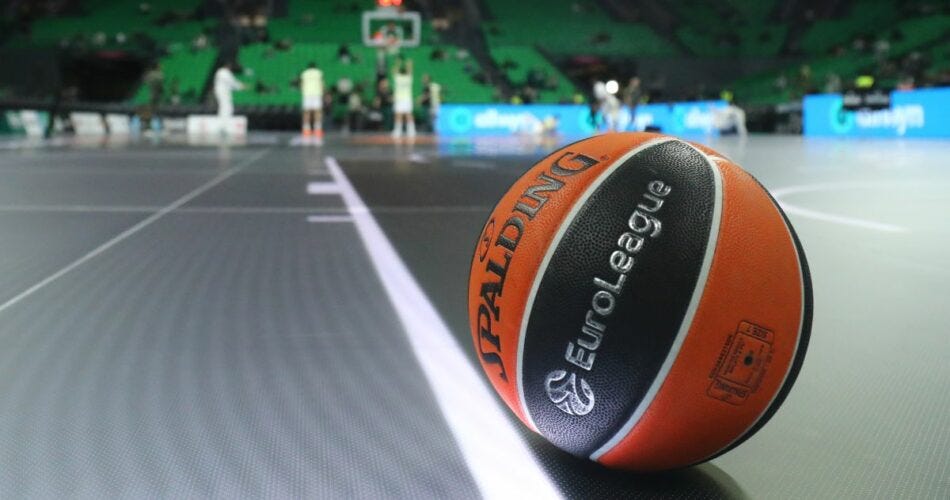
On January 9, 2026, EuroLeague formally sent a letter to the NBA’s offices warning of potential legal action if the league engaged with teams under long-term contractual commitment to EuroLeague. The letter was sent to all clubs with A-licenses, and all clubs were informed of their obligations under their licensing agreements.
EuroLeague’s legal position seems to rest on those 10-year licenses, but with an important caveat: clubs can exit with a €10 million penalty plus additional damages. This creates a tension between EuroLeague’s contractual rights and the CJEU’s ESL ruling that SGBs cannot use prior-approval rules to prevent competition. The NBA’s legal team reportedly believes it can lawfully engage with all EuroLeague teams, signed extensions or not.
EuroLeague’s Competitive Response
Far from passively waiting, EuroLeague has accelerated its own strategic repositioning as it has been widely reported:
· In March 2026, it commissioned a comprehensive valuation by JB Capital, which placed the combined enterprise value of EuroLeague and its clubs at over €3.2 billion (league at €1.41B, clubs at €1.8B collectively)
· EuroLeague projects sustained revenue and EBITDA growth exceeding a 10% CAGR from 2022/23 through 2034/35
· It launched a €2.5 billion capital-raising initiative to modernise infrastructure, expand digital capabilities, and potentially move to a franchise model
· EuroLeague officially announced the adoption of its new Competitive Balance Standard (CBS) — a soft cap / financial regulation system — for progressive implementation through 2027-28, anticipating regulatory pressure
The Impasse (April-May 2026)
On the last week of April 2026, it was reported that the NBA, FIBA, and EuroLeague met at FIBA headquarters in Mies, Switzerland. The meeting concluded with a formulaic “constructive discussions” joint statement but no concrete progress.
The positions seems to remain structurally incompatible as it has been reported in the media:
· NBA’s position: Pressing ahead with NBA Europe (October 2027), open to EuroLeague teams buying permanent franchise spots or qualifying annually through FIBA’s merit pathway
· EuroLeague’s position: Will only cooperate if all 20 of its current teams are guaranteed places in any new structure
It has been reported that EuroLeague CEO Chus Bueno — notably a former NBA Spain executive of 12 years — expressed openness to “almost anything, from merging with the NBA’s European league or having it buy equity in the EuroLeague,” stating: “Everything is on the table”. But the April 28 meeting produced no movement, and binding franchise bids are expected soon as it has been widely reported across the media, creating pressure for resolution.

The Investment Picture
Bids Received
Before the March 31, 2026 non-binding bid deadline, the NBA received proposals from over 120 investment groups, with multiple bids exceeding $1 billion and “numerous others” meeting or exceeding the $500 million threshold. The league’s stated target was $500M–$1B for permanent franchise licenses.
Investor Concerns
Despite the headline figures, investor skepticism has emerged on key structural points according to media reports:
1. Revenue distribution: The proposed 45%/45%/5%/5% split — compared to UEFA taking only 2.5% from its competitions — means clubs receive a far smaller share of revenues than in European football
2. Franchise fees flowing to NBA owners: Concerns have been raised that a significant portion of franchise fees could be redistributed to existing NBA team owners rather than reinvested into the European league
3. Capital asymmetry: High upfront costs ($500M–$1B + arena infrastructure) against uncertain returns in an underdeveloped market
4. NBA’s 50% ownership: Investors get only 50% of the new entity while the NBA retains half — limiting upside
5. Revenue uncertainty pre-EuroLeague resolution: Investors face committing before knowing whether NBA Europe will face direct competition from a fully operational EuroLeague or achieve a merger
The NBA is now reviewing bids in detail with JPMorgan and Raine Group, seeking to “identify partners who share our vision and commitment to accelerating the growth of the game”.
Expected Resolution Scenarios
Scenario 1: NBA Proceeds Unilaterally (Most Likely)
According to media reports, given the NBA’s stated commitment to proceed “with or without EuroLeague” and the volume of investor interest (120+ parties, multiple $1B bids), the most likely near-term outcome is that the NBA formally announces franchise allocations in summer 2026, targets an October 2027 launch, and proceeds regardless of EuroLeague’s cooperation.
In this scenario it seems that likely outcomes could be:
· Real Madrid and ASVEL likely join NBA Europe; Barcelona and Fenerbahce stay in EuroLeague (at least initially)
· EuroLeague continues as a rival top-tier competition, likely losing 2–4 clubs
· EuroLeague accelerates franchise model and investment raise to compete
· EU monitors but does not formally intervene under competition law
· Legal action from EuroLeague over club poaching likely tested in courts
EU Commission likely position in this scenario: Continues to issue political warnings, potentially passes soft-law recommendations on financial solidarity and fiscal protections. Formal Article 101/102 action is unlikely given that co-SGB (FIBA) endorsement removes the strongest competition law argument. The Commission’s leverage is primarily political and fiscal, not juridical.
Scenario 2: NBA-EuroLeague Merger or Partnership (Likely)
According to media reports, EuroLeague CEO Bueno’s stated openness to a merger scenario — and the NBA’s acknowledgement that “the optimal scenario would be for us to collaborate with EuroLeague” — creates a viable pathway. According to media reports, Bueno’s “ideal scenario” is “one giant league that marries [EuroLeague’s] franchises with the dozen or so that the NBA intends to have”.
In this angle a deal could potentially look like:
· NBA acquires an equity stake in EuroLeague Basketball (30–50%)
· All EuroLeague teams receive guaranteed places in an expanded 24-28 team structure, with NBA providing capital, branding, and commercial infrastructure
· FIBA retains international competition governance; EuroLeague becomes the operating entity
· Revenue distribution renegotiated to satisfy NBA ownership while improving club economics
This scenario could likely satisfy EU concerns more readily, as EuroLeague is an established European entity with governance embedded in EU law. However, it would require the NBA to accept a lower degree of control than its current proposal envisages — the core sticking point.
Scenario 3: Delayed Launch or Restructured Model (Unlikely)
Political pressure from the EU, combined with franchise bid challenges and the EuroLeague impasse, could force the NBA to push the launch from October 2027 to a future date. There were already unconfirmed reports in late 2025 of a delay being considered following early political pushback.
In this scenario, the NBA could use additional time to:
· Negotiate a comprehensive CBA with players’ unions across Europe (mitigating competition law risk)
· Restructure the revenue model to address investor concerns
· Resolve the UK domestic league dispute (BBF vs. SLB)
· Seek formal comfort from the European Commission on fiscal and competition compliance
Scenario 4: Formal EU Regulatory Block (Very Unlikely)
This remains the least likely scenario. Legal consensus seems to be that the mere establishment of an NBA-FIBA league does not breach EU competition law. A formal Commission investigation would require a specific complainant (EuroLeague, a club, players, or a national federation), a demonstrable effect on trade between Member States, and evidence of an Article 101 or 102 violation — conditions that are not currently met by the league’s proposed structure as it has been widely reported in the media.
However, risk remains if the salary cap is implemented without a CBA, or if a draft system targeting European players is introduced, or if broadcasting rights are structured in a way that forecloses EuroLeague from key markets, the likelihood of a formal investigation would rise materially.
Impact by Stakeholder
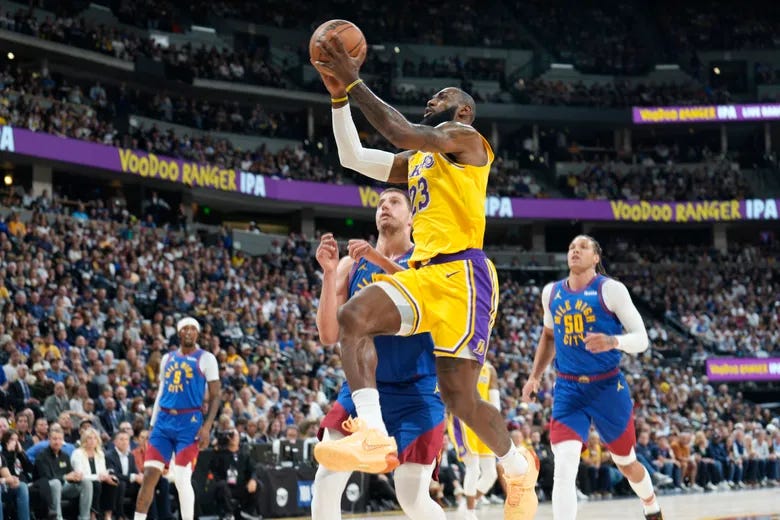
NBA
Strategic upside: Europe is a “generation-defining” commercial opportunity. Basketball captures less than 1% of Europe’s $45 billion sports media and sponsorship market, yet produces nearly a third of the NBA’s superstar talent. NBA Europe represents a direct pipeline control mechanism, brand expansion into the world’s largest untapped basketball market, and a long-term revenue diversification strategy.
Key risks: Profitability is “multi-decades” away by reported NBA’s own admission. The structural complexity of multi-country operations (tax variance, currency risk, labour law fragmentation, political exposure) is substantially harder than any domestic expansion. The EU’s 50% ownership concern and value-extraction argument create regulatory overhang. A failed or fractious launch would damage the NBA’s global brand according to media reports.
Likely outcome: The NBA proceeds on its own terms. The reported 120+ investor proposals and $1B bids give it commercial validation. The EU’s political criticism is absorbed without triggering formal legal action. Adam Silver navigates a “multi-decade” buildout that prioritises brand and talent pipeline over near-term profit.
FIBA
Strategic upside: After two decades of institutional conflict with EuroLeague, NBA Europe seems to be restoring FIBA to the apex of European club basketball governance. FIBA’s partnership provides the legitimacy the NBA needs to navigate EU law (co-SGB model) and validates its authority over the continent’s sporting pyramid.
Revenue: As per reports on the media FIBA receives 5% of revenues under the current model — a relatively modest share for its important legitimising role. A successful NBA Europe dramatically raises the commercial value of that 5%.
Key risks: If a NBA-EuroLeague merger occurs, FIBA may find the risk of having its role diluted. The EuroLeague’s existing relationship with its clubs is deep and contractual, and a merged entity might reduce FIBA’s structural control. Additionally, if NBA Europe’s format is successfully challenged as insufficiently open (under Art. 165 TFEU), reputational damages are a possibility.
EuroLeague
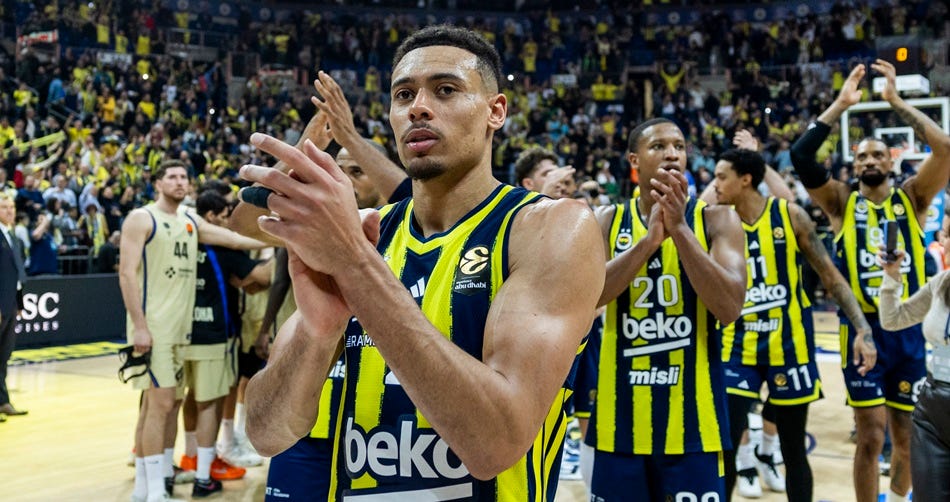
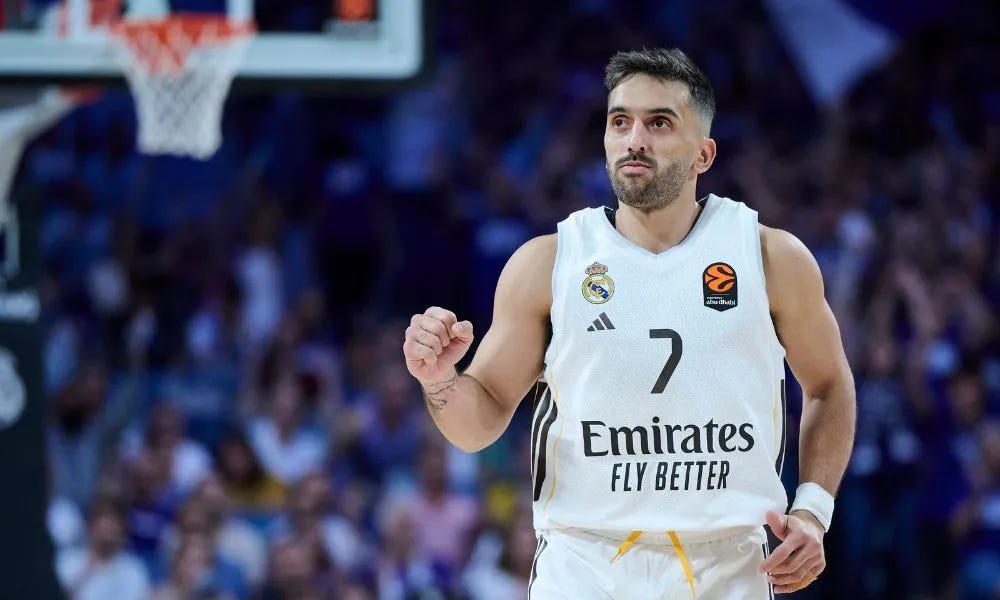
Existential pressure: EuroLeague faces the most complex strategic situation of its 25-year history. It has responded with commercial agressiveness — a €3.2B valuation, a €2.5B investment raise, the adoption of CBS financial regulations, and the hiring of a former NBA executive as CEO. These moves seems to signal both strength and anxiety.
The core dilemma: EuroLeague cannot prevent the NBA from entering Europe (per the ESLC ruling’s spirit and the FIBA endorsement of the rival project). It can potentially challenge individual contract breaches and potentially seek damages for clubs that exit, but seems to be unable to block the league itself. Its leverage lies in its clubs, its existing broadcasting deals, and the EU’s political sympathy for the European Sport Model as it has been reported in the media.
Likely outcome: A protracted parallel existence (two top-tier leagues competing), potentially culminating in a negotiated settlement on NBA’s terms within 2–3 years, particularly if Real Madrid, ASVEL, and new-market franchises give NBA Europe sufficient critical mass. EuroLeague’s €3.2B valuation and 10% CAGR projection suggest it believes it can survive as a viable competitor, likely serving as EuroLeague the second-tier feeder competition or a merged entity.
Clubs and Investors
For existing EuroLeague clubs that join NBA Europe: High entry costs ($500M–$1B franchise fee) but potentially transformative brand and commercial exposure — particularly for clubs in underserved markets (new London/Manchester franchises) or globally recognised brands (Real Madrid). It has been reported in the media that the 45%/45%/5%/5% revenue model is the central concern: investors are being asked to capitalise substantially while ceding half the economic upside to the NBA and competition entity.
For new franchise investors (PE, SWF, other sports organizations): The investment thesis is long-term and strategic — acquiring a generational sports asset at valuation entry point before the market matures. Multiple bids over $1B signal conviction. However, uncertainty over final future potentially create execution risk.
For clubs remaining in EuroLeague: If NBA Europe launches with Real Madrid and other marquee names, EuroLeague’s commercial value could temporarily decline before stabilising. EuroLeague’s own franchise model evolution and €2.5B capital raise seem to be designed to counteract this.
Spanish think tank analysis (Instituto Coordenadas, November 2025) frames the risk clearly: “The NBA Europe model poses substantial risks — from the concentration of profits outside the continent and the erosion of fiscal sovereignty to the weakening of the local sporting fabric.”

Domestic Leagues and National Federations
NBA Europe teams are designed to participate in both the new league and their domestic national leagues, creating a potential financial boost for national competitions. However, the Commission’s concern about solidarity mechanisms — payments from elite to grassroots — seems well founded. As it has been reported in the media, the NBA’s 50% equity ownership means redistribution flows from European basketball may be structurally reduced over time.
In the UK, the situation is acutely complex: FIBA has been considering sanctions against Great Britain national teams due to an unresolved dispute between Super League Basketball (SLB) and the British Basketball Federation (BBF), a conflict exacerbated by the NBA’s need for a functional domestic league for its London and Manchester franchises as reported in the media
The Media Rights Landscape
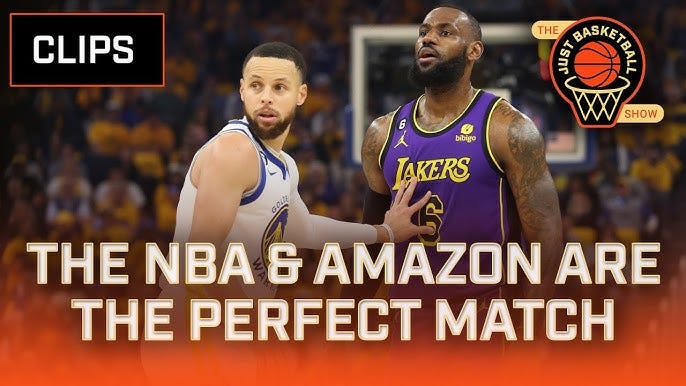
As reported in the media, NBA Europe looks to have held conversations already with Amazon and YouTube over broadcasting rights, reflecting its ambition for global digital-first distribution. NBC Sports (already the NBA’s domestic partner under a landmark $76 billion, 11-year deal signed in 2024) has expressed early interest, with NBC Sports President Sam Flood stating: “We are big believers in the NBA, and anything the NBA touches turns to gold or platinum”. No broadcast deal seems to have been signed, with the league stating “no decision” has been made on partners yet.
The media rights deal will be the defining financial moment for NBA Europe — anchoring franchise valuations, determining revenue pool size, and validating the entire business model.

The Geopolitical Dimension
The Commission’s pointed reference to “the diversion of value flows to third countries” in its Micallef answer takes on additional resonance given the 2025-2026 period of heightened transatlantic trade tensions. While not explicitly naming the US, the Commission is invoking internal market protection law in a context where the NBA — a US private entity — would control 50% of the equity of a competition generating revenues across the EU single market has it has been reported over the media.
The EU has previously engaged its internal market and competition tools to constrain foreign platform dominance (see the Digital Markets Act and data transfer restrictions). While sports law differs from digital market regulation, the political appetite for asserting EU economic sovereignty against US commercial entities seems to be at a multi-year high.
This does not mean formal action will follow — but it does mean the Commission will potentially be less likely to expedite regulatory comfort, and more likely to scrutinise fiscal compliance rigorously.
Conclusion and Outlook
The European Commission has staked out a position that is politically significant but legally calibrated: it has expressed unambiguous concern about NBA Europe’s closed-league model, value extraction, and compatibility with the European Sport Model, while stopping well short of initiating formal competition law proceedings or claiming that the league’s establishment violates the EU treaties.
According to multiple media reports this seems to be the correct legal position. The FIBA co-organisation of NBA Europe removes the most powerful EU competition law argument (SGBs’ abuse of dominant position in blocking new entrants). The semi-open format (12 permanent + 4 qualifying) navigates — if narrowly — the Article 165 TFEU “fairness and openness” requirement. The Commission’s leverage, therefore, is primarily political and fiscal rather than juridical.
The most critical unresolved legal risk is the salary cap: without a comprehensive, multi-national CBA, a cap imposed by agreement between clubs could trigger an Article 101 TFEU challenge from player unions or individual clubs. The NBA will need to negotiate a European CBA framework before the league’s first season — a complex but achievable goal has been reported in the media.
As of May 2026, the trajectory seems to point towards NBA Europe launching in a form that the Commission and Parliament criticise but cannot formally block — operating alongside a restructured, franchised EuroLeague in a period of competitive coexistence. The resolution of whether that coexistence becomes cooperation, competition, or eventually consolidation will depend on negotiations between now and binding bid deadlines during 2026, the media rights deal, and the decisions of pivotal clubs — above all, Real Madrid, as reported in the media.
The truth is likely to sit somewhere in between – and it will be written not in press conferences, but in contracts, calendars, revenue splits and who gets a permanent seat at which table.
One to follow
Sources: European Parliament Written Question E-004629/2025; Eurohoops (EU Commissioner Micallef response, February 2026); Wolters Kluwer Competition Law Blog; City AM; The Athletic; Reuters; Front Office Sports; Sports Business Journal; Mundo Deportivo; Hoopsfix; Basketball.com.au; Sportcal; Eurohoops; BBC Sport; CNBC; LawInSport; EuroLeague press releases; FIBA press releases; NBA official statements.